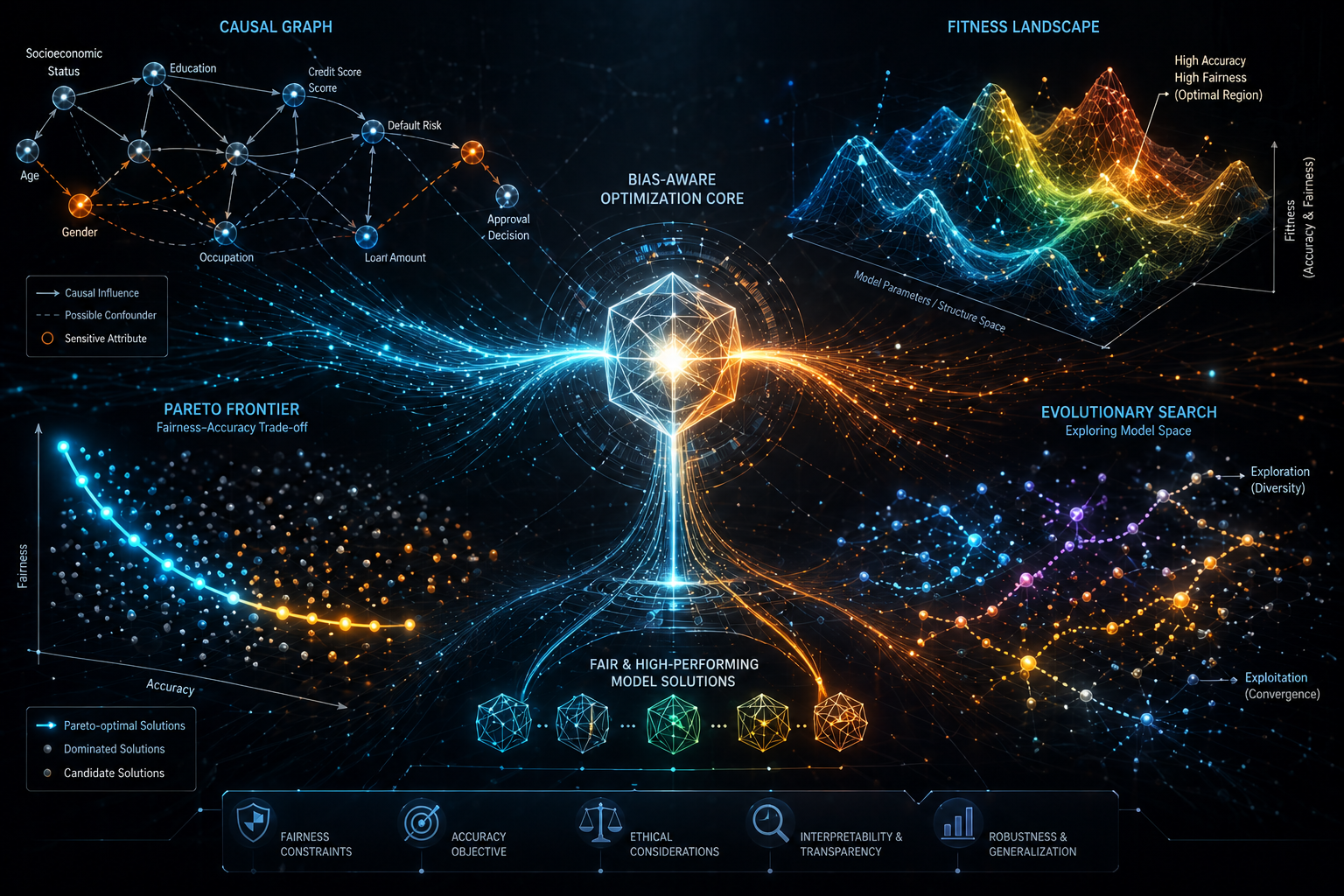
The OptimumT Fair AI Manifesto
Engineering Accountability into the Autonomous Loop
At OptimumT, we define Fair AI through the lens of Robustness, Transparency, and non-discriminatory Logic. For an autonomous agent to be “Fair” in a mission-critical environment, its reasoning must be as unbiased as the physics it operates within.
Our Three Pillars of Algorithmic Integrity
1. Representative Data Synthesis
Bias in AI often stems from “Data Silos”—training models on narrow datasets that don’t reflect the chaos of the real world.
-
The OptimumT Approach: We utilize FAIR Data Principles (Findable, Accessible, Interoperable, Reusable) to ensure our agents are trained on diverse, high-fidelity industrial and clinical datasets. Whether navigating a drone swarm in the North Sea or a surgical robot in a rural clinic, our agents recognize and adapt to environmental variance without performance drift.
2. Explainable Reasoning (XAI)
A “Fair” agent is one that can be audited. We move away from “Black Box” models toward Explainable AI.
-
The OptimumT Approach: Every decision made by our Reasoning Core is logged with a clear trace of the logic used. If a drone alters its flight path or a surgical guardrail is triggered, the system provides a human-readable justification:
[LOGIC: Thermal threshold exceeded; REASON: Safety constraint alpha-7 applied].
3. Equitable Performance Standards
Fairness in industrial AI means consistent safety across all hardware and human interactions.
-
The OptimumT Approach: We conduct rigorous “Stress Testing for Equity.” We ensure our surgical tool detection works with equal precision across different tissue types and lighting conditions, and our UAV swarms maintain coordination regardless of local infrastructure quality.
Technical FAQ: Fair AI in Industry
Q: Does “Fairness” compromise system speed?
A: No. At OptimumT, fairness is integrated into the Reflector Agent loop. By verifying constraints in parallel with execution, we maintain millisecond-latency while ensuring every action remains within ethical and safety guardrails.
Q: How do you prevent “Model Drift” from introducing bias over time?
A: We implement Continuous Validation Frameworks. Our agents are not “set and forget”; they are monitored by secondary auditing agents that detect shifts in decision-making patterns, allowing for proactive recalibration before bias can impact the mission.