The Architecture of Learning
From Model Design to Edge Deployment
At OptimumT, Machine Learning is the process of building mathematical models that improve through experience. We focus on creating high-performance, resilient models that transition seamlessly from a localized training environment to high-stakes, real-time deployment.
1. Our ML Toolchain: The Life of a Model
We don’t just “train” models; we engineer their entire lifecycle to ensure they remain accurate and unbiased throughout their operational life.
-
Feature Engineering & Pipeline Design: We specialize in extracting meaningful signals from high-entropy data (vibrations, thermal, and high-frequency telemetry).
-
Model Selection: We utilize a “Right Tool for the Job” approach, ranging from XGBoost for structured tabular data to Vision Transformers (ViT) for complex spatial reasoning.
-
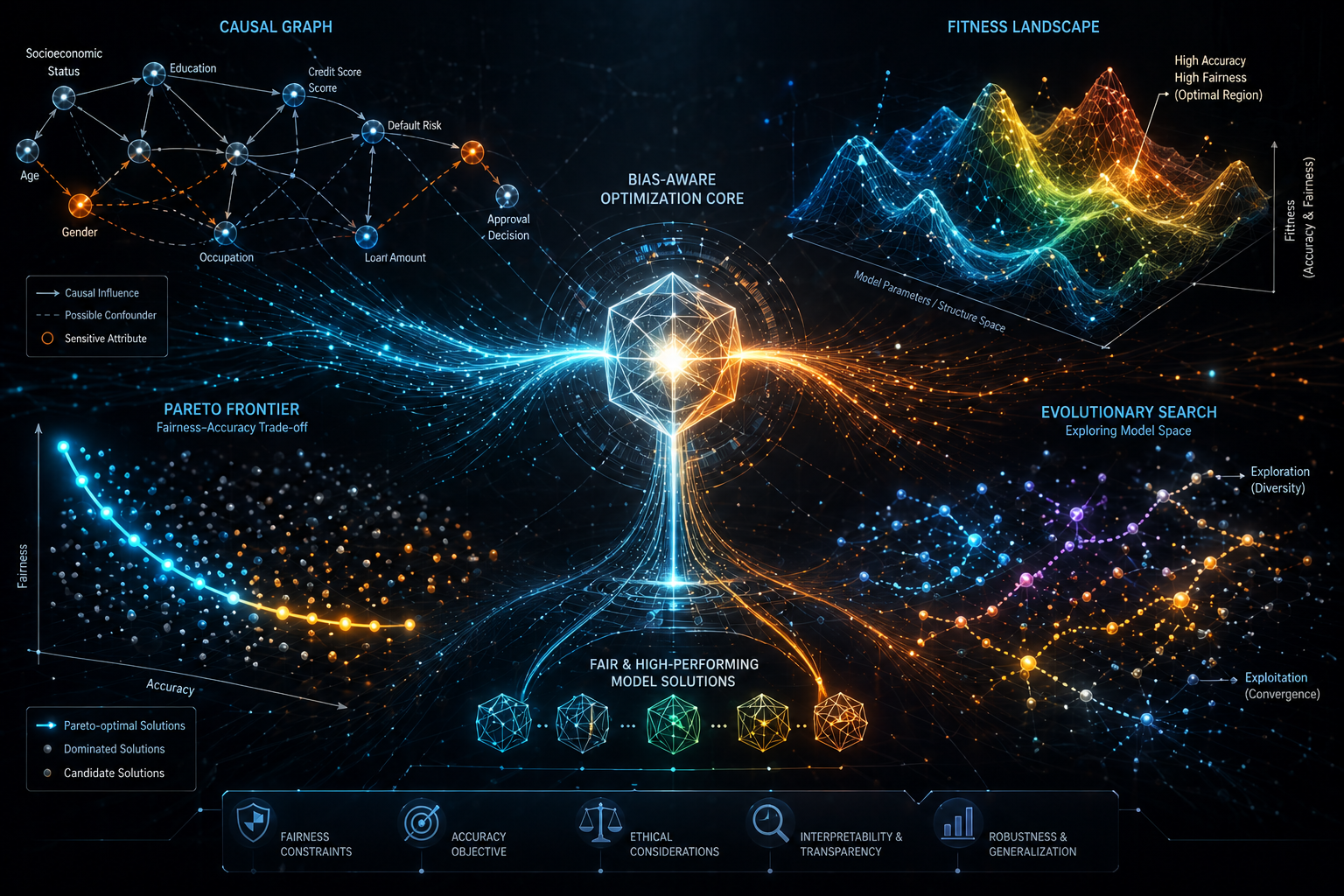
Hyperparameter Optimization: Using automated Bayesian search to find the “Global Minimum” of loss, ensuring the most efficient convergence possible.




2. MLOps: Reliability at Scale
A model is a liability if it cannot be monitored. Our MLOps (Machine Learning Operations) framework ensures that our models stay “Healthy” once they leave the lab.
-
Drift Detection: We implement active monitoring to detect Concept Drift—when the real world changes and the model’s accuracy begins to degrade.
-
Automated Retraining: Our pipelines are designed to trigger retraining loops automatically when performance thresholds are crossed.
-
Model Versioning: Total traceability of every weight and bias, ensuring we can “roll back” to a previous state if an anomaly is detected in production.
3. Deep Learning & Neural Architectures
For tasks requiring human-level perception, we deploy advanced deep learning frameworks.
-
Graph Neural Networks (GNNs): For analyzing complex relational data, such as supply chain nodes or interconnected sensor arrays.
-
Recurrent Systems (LSTMs/Transformers): For time-series forecasting where the sequence of data is as important as the data itself.
-
Transfer Learning: Utilizing “Pre-trained” backbones to give our agents a head-start, significantly reducing the time and data required for clinical or industrial training.
Privacy-Preserving Intelligence: Federated Learning & On-Device Training
In high-consequence environments—be it a surgical theater or a secured industrial facility—data is the most sensitive asset. Sending raw telemetry to a centralized cloud for training is often a regulatory or security non-starter.
At OptimumT, we move the training to the data, not the data to the training.
1. On-Device Training (The Local Loop)
Our models are designed for Edge-Native Learning. Instead of being static “read-only” files, our agents can fine-tune their parameters locally on the hardware they inhabit.
-
Environmental Adaptation: The system learns the specific “noise” and nuances of its local environment without ever exposing that data to an external network.
-
Latency-Zero Optimization: By learning on the edge, the system can adapt to mechanical wear-and-tear or changing conditions in real-time, ensuring peak performance without a round-trip to the cloud.

2. Federated Learning (Collaborative Privacy)
For fleets of devices, we implement Federated Learning architectures. This allows a global model to improve based on the experiences of every device in the field without any raw data ever leaving its local source.
-
Model Weight Exchange: Only the “mathematical updates” (gradients) are shared with a central coordinator—never the raw patient data, images, or sensor logs.
-
Privacy by Design: This satisfy GDPR, HIPAA, and SOC2 requirements by ensuring that sensitive PII (Personally Identifiable Information) remains physically isolated at the point of origin.
The OptimumT Edge-First Advantage
| Feature | Cloud-Centric AI | OptimumT Edge-Native ML |
| Data Privacy | High Risk (Centralized) | Absolute (Stays on Device) |
| Connectivity | Required for Inference | Fully Offline Capable |
| Regulatory Fit | Difficult (MDR/HIPAA) | Native Compliance |
| Response Time | Network Dependent | Microsecond Latency |
The Classical Engine: Robust Statistical Learning
While Deep Learning captures the headlines, traditional Machine Learning provides the mathematical backbone for structured data analysis and predictive modeling. We utilize these algorithms when interpretability, speed, and data efficiency are the primary requirements.
Our Classical Toolkit
-
Tree-Based Ensembles (XGBoost, LightGBM, Random Forest): Our “go-to” for predictive maintenance and non-linear classification. These models excel at handling structured sensor telemetry and provide clear Feature Importance rankings, allowing us to tell a client exactly why a system flagged a potential failure.
-
Support Vector Machines (SVM): Utilized for high-dimensional classification tasks where the boundary between “Normal” and “Anomalous” operation is complex but clearly defined.
-
Linear & Logistic Regression (Regularized): We use Lasso and Ridge regression for baseline modeling and trend forecasting. These are the workhorses of clinical data validation where every coefficient must be explainable to a regulatory body.
-
Dimensionality Reduction (PCA, t-SNE, UMAP): Essential for visualizing high-dimensional state spaces. We use these to compress thousands of sensor inputs into a manageable “Latent Space” that our Agentic Reflector can process in real-time.
The Optimization Layer: Meta-Heuristic Search
When the search space is too large or too “rugged” for standard derivatives, we deploy meta-heuristic algorithms. These are nature-inspired and population-based strategies that ensure our systems find the Global Optimum, not just a “good enough” local solution.
1. Evolutionary & Genetic Algorithms (GA)
We use GAs for complex structural design and parameter tuning. By simulating “survival of the fittest,” the system evolves solutions over generations.
-
Use Case: Optimizing the physical geometry of a robotic component or tuning the hyper-parameters of a deep neural network (Neuroevolution).
-
Benefit: It handles “noisy” objective functions where traditional gradients don’t exist.
2. Particle Swarm Optimization (PSO)
Inspired by the social behavior of bird flocks, PSO uses a “swarm” of candidate solutions that move through the search space, influenced by both their own best-known position and the swarm’s global best.
-
Use Case: Coordinating multi-agent systems, such as a swarm of inspection drones or a fleet of autonomous warehouse robots.
-
Benefit: Extremely efficient at finding optimal paths in dynamic, high-dimensional spaces.
3. Simulated Annealing (SA)
Inspired by metallurgy, SA slowly “cools” a search process. Early on, it allows for “bad” moves to escape local minima; as it cools, it settles into a highly refined global minimum.
-
Use Case: Large-scale logistics scheduling and hardware layout optimization where the goal is to minimize cost or energy consumption.
4. Ant Colony Optimization (ACO)
Modeled on how ants find the shortest path to food using pheromone trails.
-
Use Case: Network routing and the “Traveling Salesman Problem” in industrial supply chains.
Why Meta-Heuristics Matter:
Standard ML says: “What is this data?”
Meta-heuristics say: “What is the best possible configuration for this entire system?”
| Method | Strength | Application at OptimumT |
| Gradient Descent | Speed in smooth spaces | Training Neural Networks |
| Meta-Heuristics | Robustness in “Rugged” spaces | System-wide Optimization & Agency |