Beyond Perception to Spatial Intelligence
High-Fidelity Visual Reasoning for Autonomous Systems
At OptimumT, we view Computer Vision as the primary sensory interface for the Reasoning Core. Our CV toolchain doesn’t just identify objects; it extracts the underlying geometric and physical properties of the environment. By fusing deep learning with classical projective geometry, we provide agents with a high-confidence “World Model” that persists in the most challenging visual conditions.
Our Vision Stack: Technical Pillars
1. Deterministic Object Detection & Segmentation




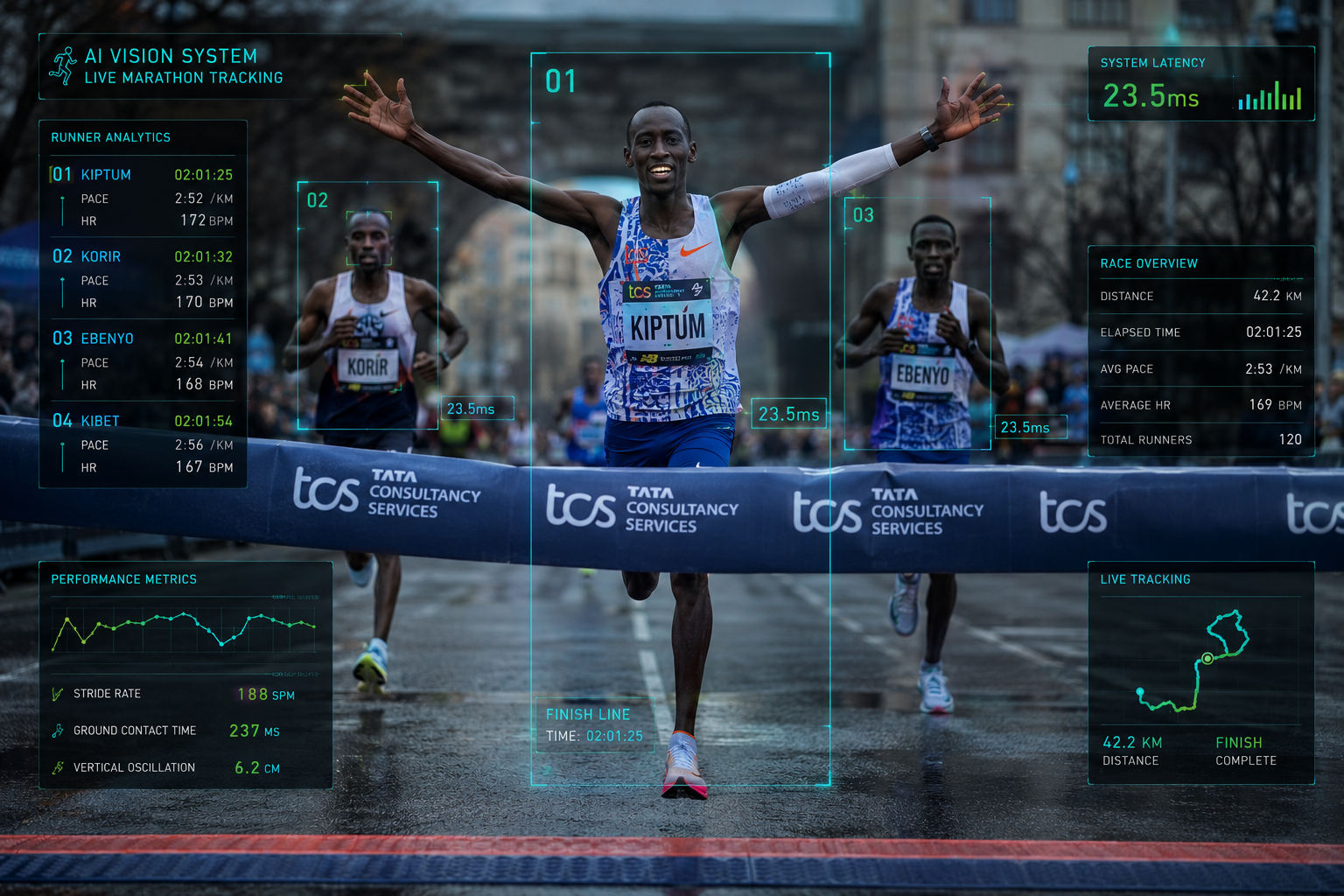
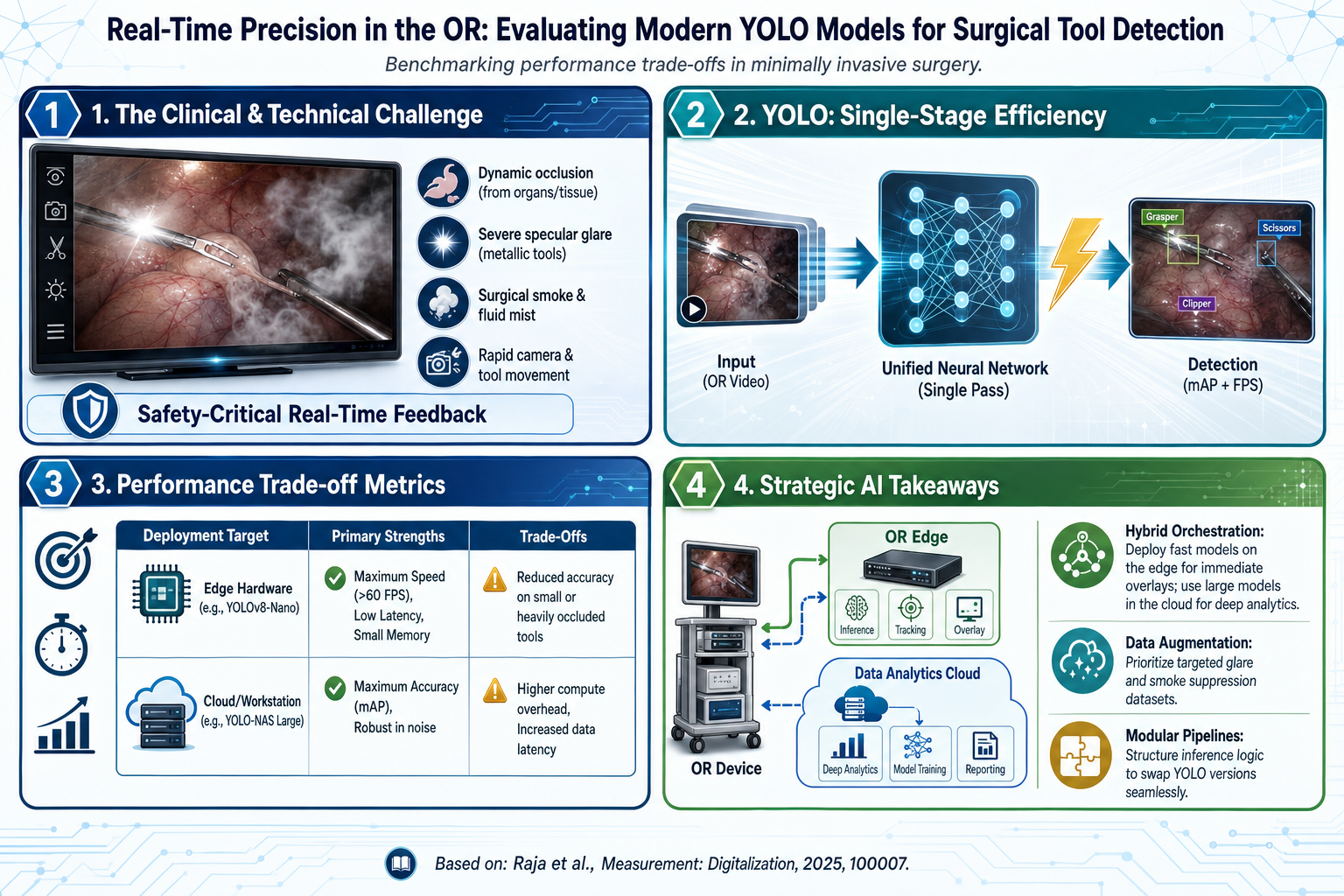


We utilize advanced architectures (such as Transformer-based Vision models) optimized for edge-native performance.
-
Instance-Level Precision: We go beyond bounding boxes to provide pixel-perfect semantic segmentation, critical for surgical tool tracking or UAV obstacle avoidance.
-
Temporal Consistency: Our algorithms track features across frames to maintain a stable state, preventing “flicker” or loss of context in dynamic environments.
2. Geometric Computer Vision & SLAM
True autonomy requires an understanding of 3D space. We integrate Simultaneous Localization and Mapping (SLAM) to allow agents to map unknown territories in real-time.
-
Visual Odometry: Using monocular or stereo vision to estimate motion with millisecond precision.
-
Structure-from-Motion (SfM): Reconstructing 3D environments from 2D image sequences to provide a volumetric understanding of the workspace.
3. Multi-Spectral & Low-Light Fusion
Our systems are engineered to see where humans cannot. We specialize in the fusion of RGB data with non-visible spectrums.
-
Thermal-Visual Fusion: Overlapping heat signatures with structural data to identify anomalies in industrial infrastructure.
-
Contrast Enhancement: Algorithmic de-noising and atmospheric correction for vision in smoke, fog, or underwater environments.
The OptimumT Edge: “Visual Veracity”
We solve the “Black Box” problem of vision by introducing a layer of Geometric Verification.
-
The Reality Check: Every visual detection is cross-referenced against known physical constraints. If a visual “prediction” violates the laws of physics or the system’s geometric world model, the Reflector Agent flags it as a low-confidence signal and triggers a re-scan.
-
Sub-Millisecond Inference: By utilizing TensorRT optimization and custom CUDA kernels, we achieve the high-frame-rate processing required for closed-loop kinetic control.
Engineering Insight: Why Non-Linear MPC?
In the code on the right, the transition from Vision to Motion is handled by a Non-Linear Model Predictive Control (N-MPC) solver. While traditional PID (Proportional-Integral-Derivative) controllers are effective for simple, isolated tasks, they are fundamentally “reactive.”
At OptimumT, we utilize N-MPC because:
-
Look-Ahead Capability: The controller simulates the system’s future state over a finite time horizon, allowing the agent to “see” a collision before it happens and adjust its trajectory preemptively.
-
Constraint Satisfaction: We can bake physical limits (e.g., maximum motor torque, surgical boundary volumes, or drone tilt limits) directly into the optimization problem. The system will never “plan” a path that violates these hard constraints.
-
Multivariable Optimization: In complex computer vision tasks, there are often competing goals—such as maintaining high speed while ensuring maximum sensor stability. N-MPC allows us to find the Pareto-optimal balance between these objectives in real-time.
import optimum_t_perception as cv
from optimum_t_core import AgenticReflector, MotionPlanner
from telemetry_provider import HighSpeedStream

def run_agentic_vision_loop(device_id):
    """
    Core loop for real-time spatial reasoning and
    deterministic safety verification.
    """
    # Initialize the high-fidelity perception engine
    vision_stack = cv.SpatialInference(model="agent-v3-multimodal")

    # The Reflector enforces IEC 62304 / ISO 14971 safety bounds
    reflector = AgenticReflector(mode="deterministic_safety")
    planner = MotionPlanner(optimization="non_linear_mpc")

    stream = HighSpeedStream(source=device_id, protocol="low_latency_raw")

    for frame in stream.capture():
    # 1. PERCEPTION: Extract 3D features and segment the manifold
        raw_state = vision_stack.process_frame(frame)
        world_model = raw_state.to_geometric_manifold()

    # 2. FEATURE VALIDATION: Check for sensor noise or occlusion
        if world_model.confidence_score < 0.95:
            reflector.handle_uncertainty("Low Signal-to-Noise Ratio")
            continue

        # 3. REFLECTION: Cross-reference visual data with physical laws
        # Verifying that visual objects don't violate static constraints
        verification = reflector.verify_state(
            detected_pose=world_model.agent_pose,
            dynamic_obstacles=world_model.obstacles,
            safe_volume=reflector.get_hard_constraints()
        )

        if verification.is_verified:
        # 4. OPTIMIZATION: Compute the Pareto-optimal path
            target_path = planner.calculate_trajectory(
                current_state=world_model,
                goal=reflector.get_mission_objective()
            )

        # 5. EXECUTION: Dispatch command to hardware controller
            planner.dispatch_torque_vector(target_path)
        else:
        # 6. FAIL-SAFE: Trigger immediate mitigation logic
            planner.emergency_transition(state="SAFE_BRAKE")
            print(f"Constraint Violation Detected: {verification.reason}")
            break

# Initialize the industrial-grade vision loop
if __name__ == "__main__":
    run_agentic_vision_loop(device_id="ROB-SURG-042")